Happee Habits: Board Game for teaching washroom etiquette
Behavioral Design
Duration:
4 months
Team:
Individual Project
Excretion is a very important part of our bodies. It plays a crucial role in maintaining internal balance and overall well-being of the body. However, Not wanting to use school toilets due to poor sanitation or insufficient time has become a common experience for many children, particularly girls (The Hindu Bureau, 2024).
While maintaining cleanliness in school washrooms may appear to be the obvious solution, the issue is more complex, with one of the key underlying factors being the “lack of proper washroom etiquette.”
Design Research
Conceptualization
Prototyping
Usability Testing
Using the bathroom is one of the earliest forms of independence that children experience. Yet, the skills required to use shared or public restrooms hygienically and respectfully are often overlooked in early education.
Why this age group?
Kids between 4–9 are in their early cognitive development stage where habits are easily formed and more likely to translate into lasting behaviors
Teaching kids about washroom etiquettes right after the potty training stage can lead to seamless and natural learning while they’re still forming habits.
Washroom etiquette is an important life skill that needs to be taught along with other life skills and manners early in life
Solution
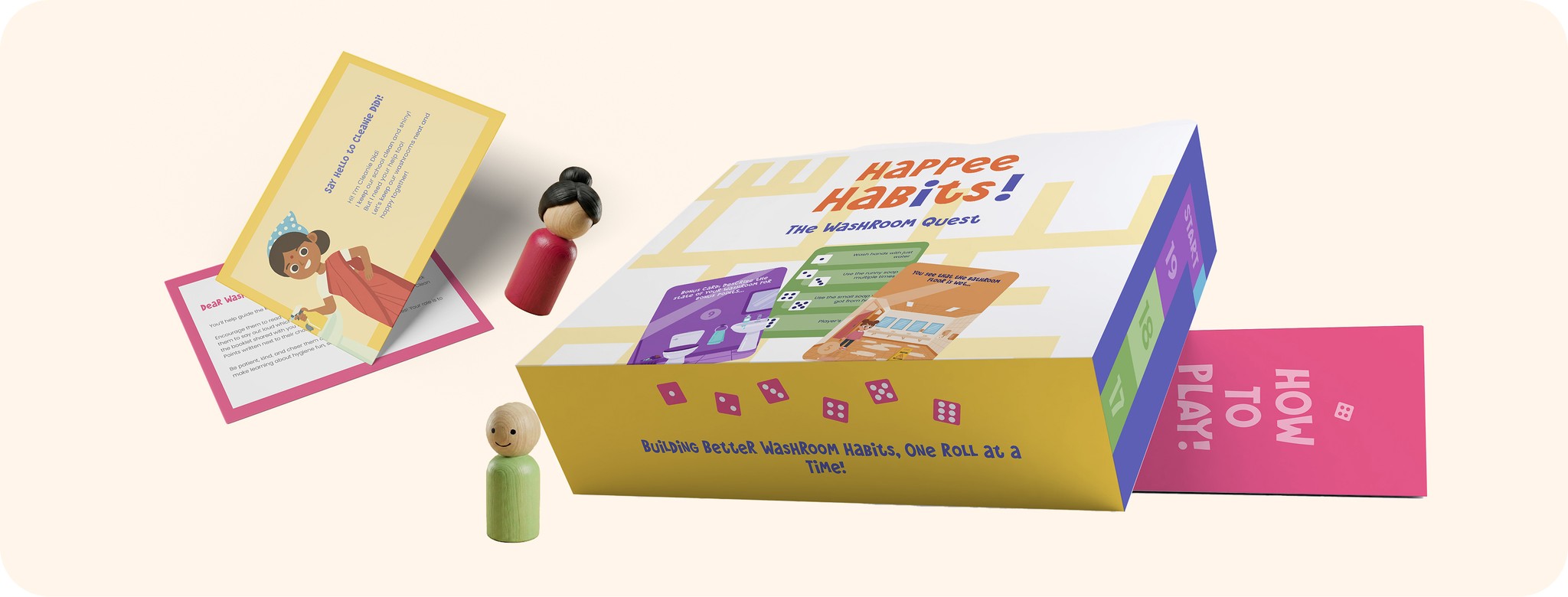
Introducing Happee Habits…
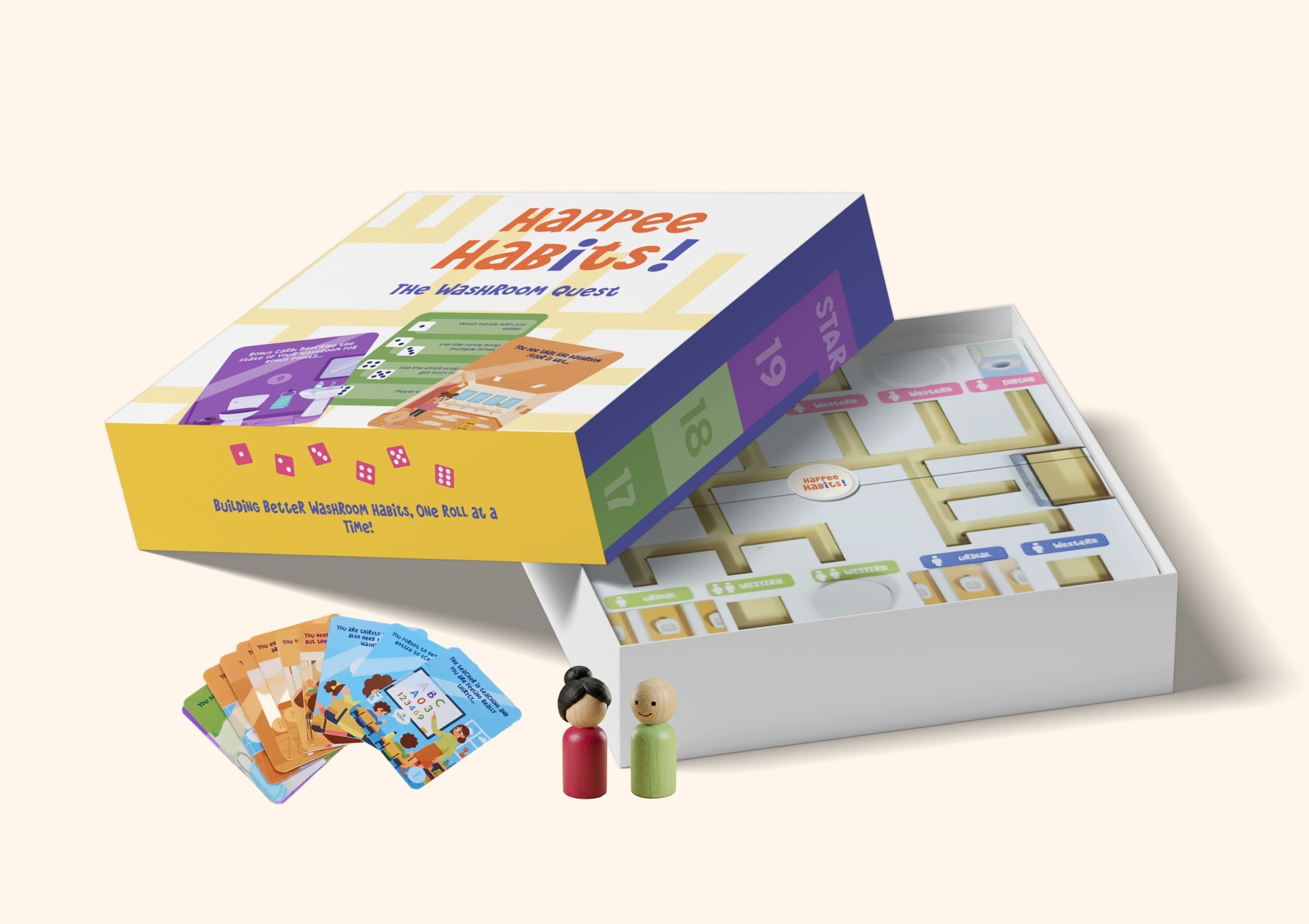
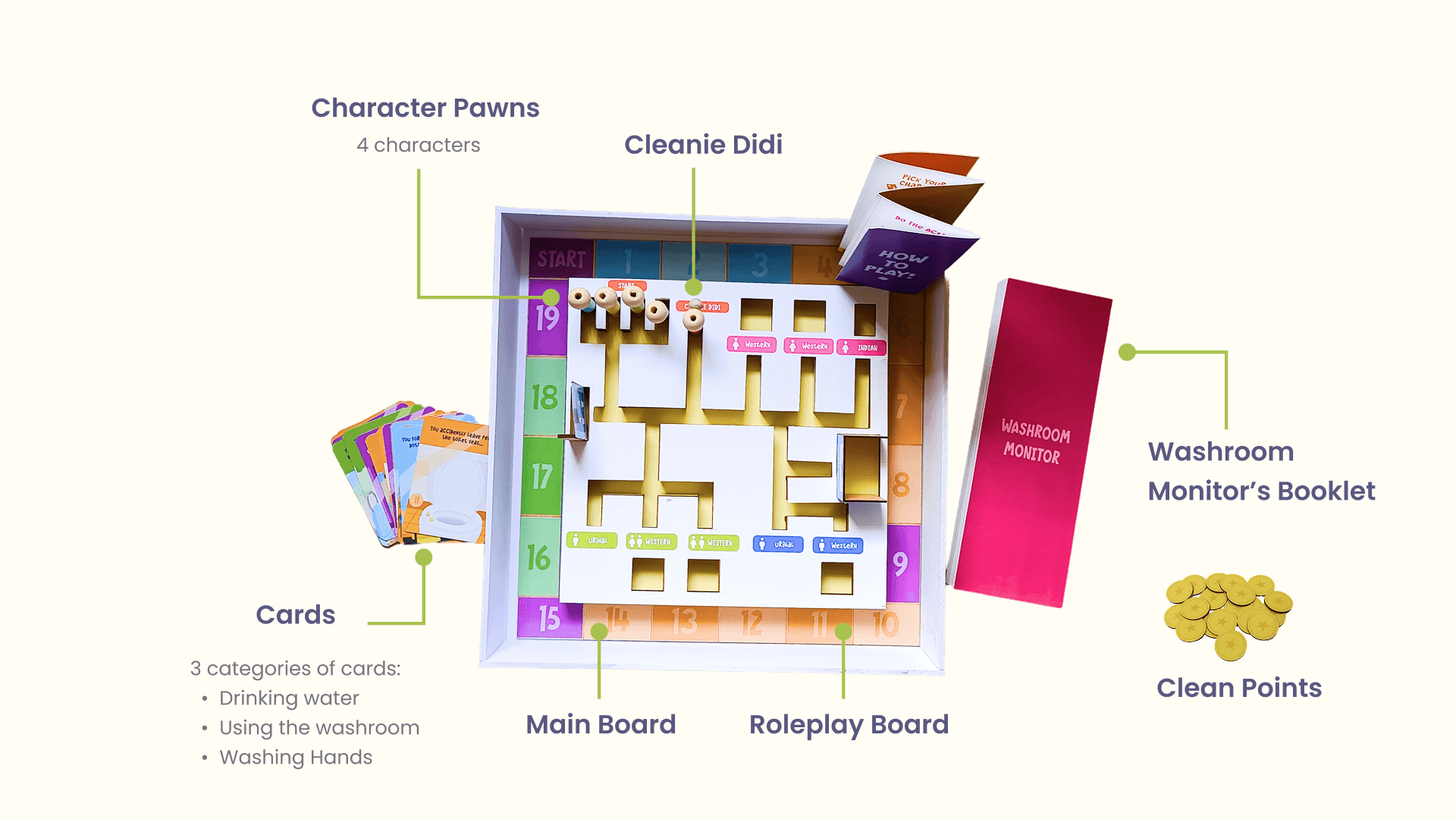
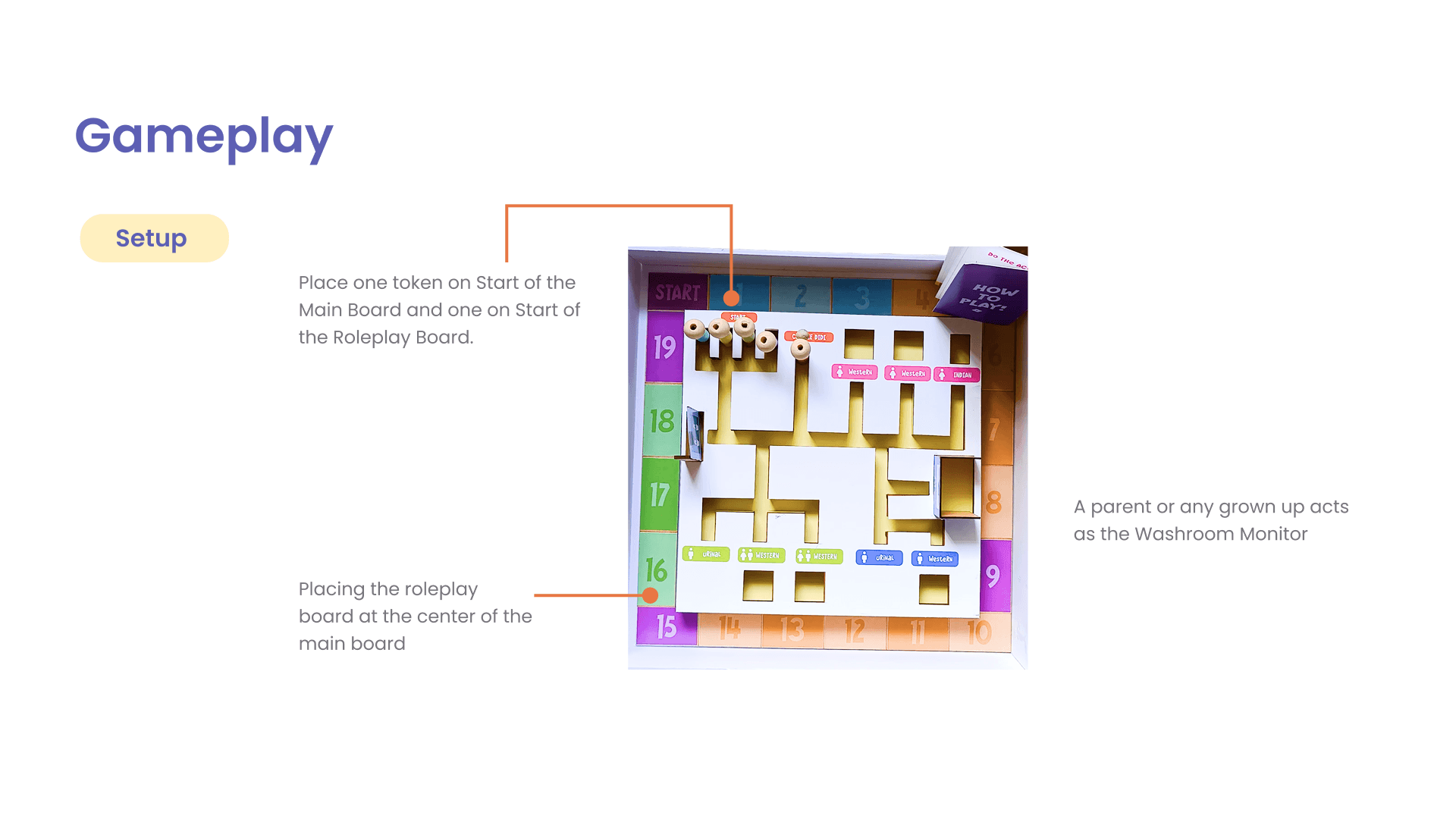
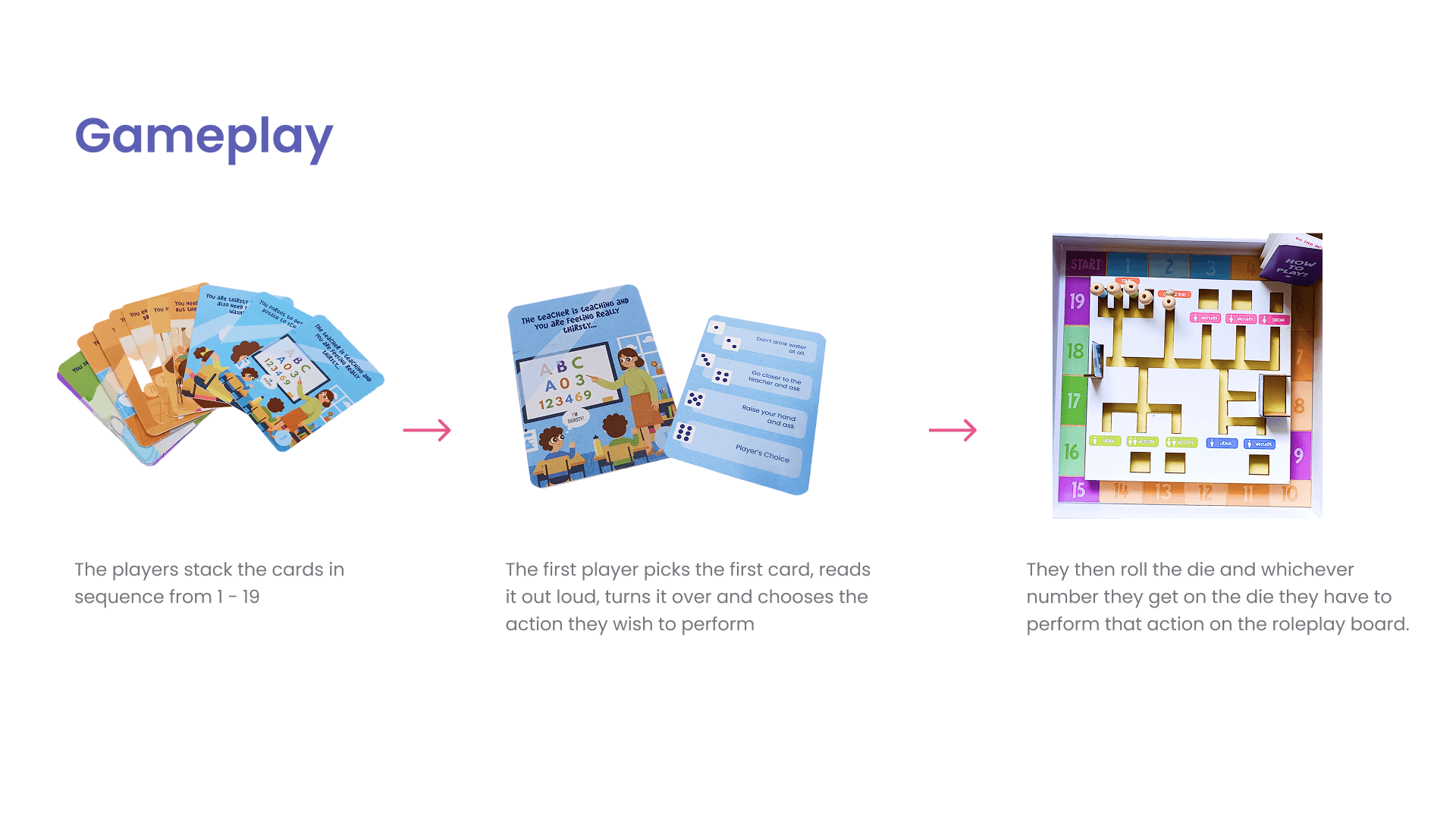
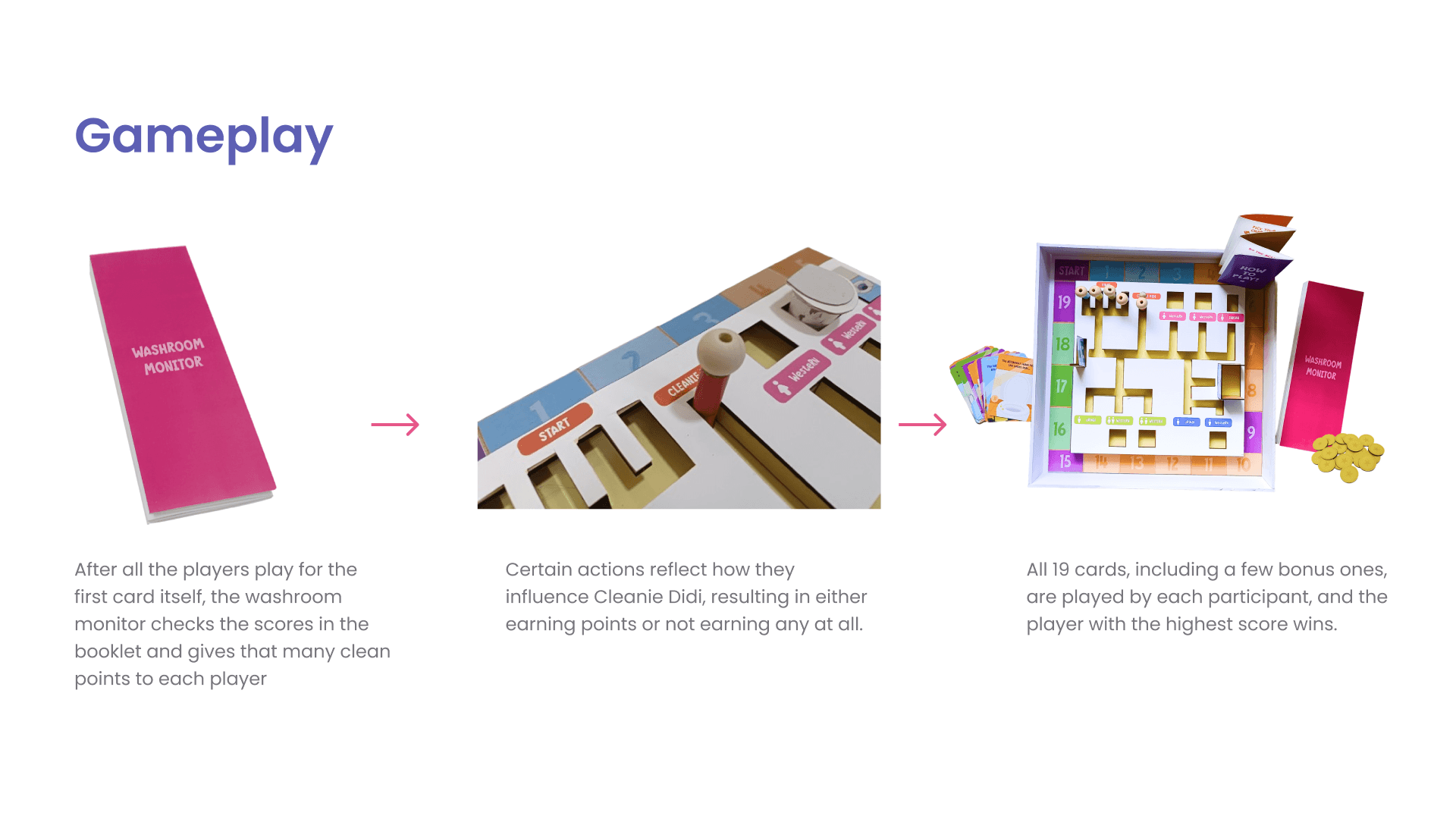
Happee Habits is a playful, interactive game that makes learning washroom etiquette fun and meaningful. With engaging roleplay and interesting gameplay, it teaches healthy habits and empathy, turning everyday learning into a joyful and memorable experience for children. The game retained familiar elements such as points, pawns, and cards, but the gameplay was given a unique twist: drawing slight inspiration from the legendary game of Dungeons and Dragons, where the roll of a die determines actions and outcomes.
Key Takeaways
Happee Habits demonstrates that simple, well-designed interventions can influence behavior in powerful ways, especially during early childhood. By integrating hygiene learning into play, it helps children form positive habits without feeling forced or instructed. Over time, these small shifts contribute to cleaner shared spaces and a stronger sense of personal responsibility, making the solution both impactful and sustainable.
Other Projects
Highlighting the Issue…
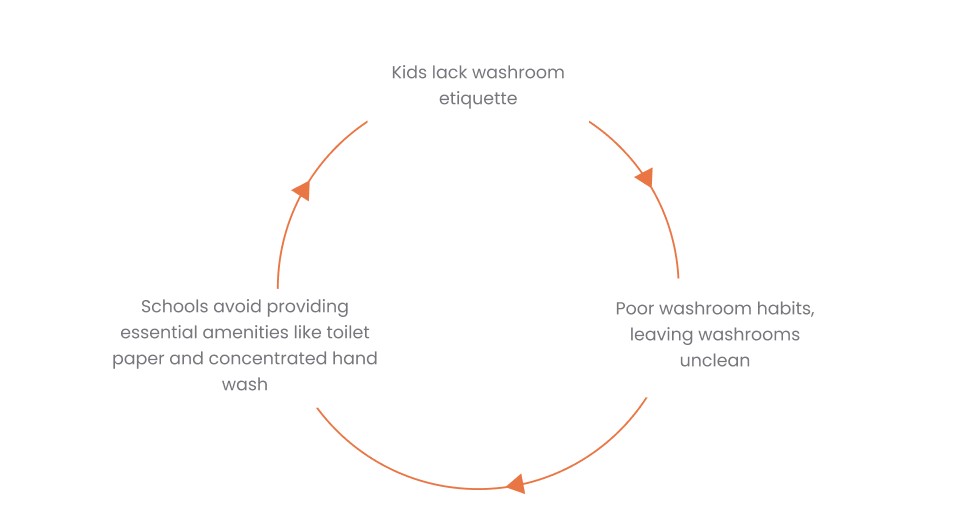
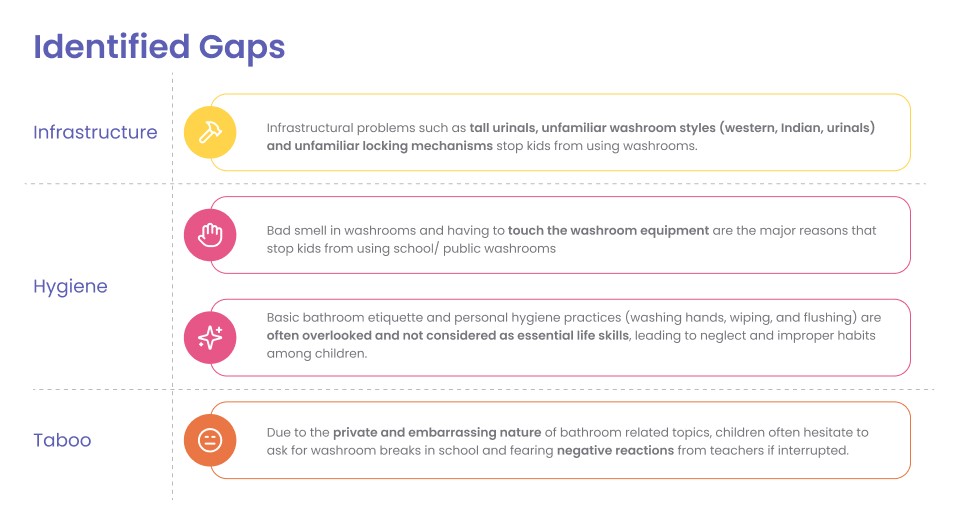
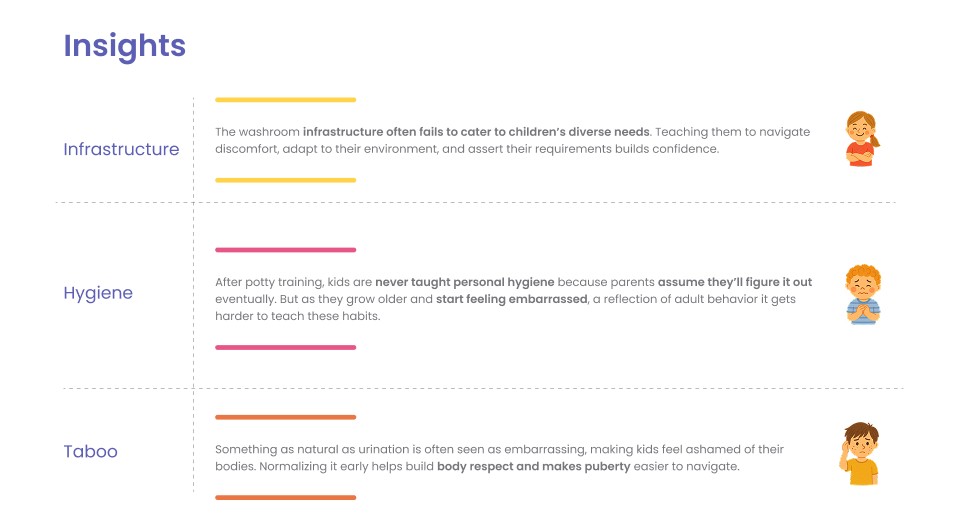
Through research, it was observed that a cycle existed where poor washroom habits resulted in unclean spaces, leading schools to cut down on resources, ultimately reinforcing the same behavior. Based on the research findings, gaps and insights were formulated which were thoroughly referred while designing the solution.
To understand kids’ behavior on a deeper level, different behavioral models like the Habit Loop, Fogg’s Model, and the Theory of Planned Behavior were used. It was observed that children often prioritize playtime or meals over using the washroom, as they don’t see it as an important task. They also feel that by avoiding the washroom, they are avoiding discomfort and unpleasant experiences. Additionally, to avoid the urge to pee, many children tend to drink less water during school hours, which ultimately affects their overall well-being.